
For NYC Firefighters, EMTs, and Paramedics: What Psychedelic Therapy Actually Offers (And What Your Real Options Are)
This article is written specifically for New York City firefighters, EMTs, and paramedics. If that's you, or if you love someone who does that work, keep reading.
If you're already skeptical, good. That's actually the right instinct for this material. I'm not going to ask you to light a candle or talk about your feelings. I'm going to give you research, legal facts, and real options, and then let you decide what to do with them.
I work with people who are ready to address what standard treatment either hasn't touched or hasn't reached. A lot of those people have spent years in high-stakes, high-trauma environments. A lot of them came to me after exhausting other options. A lot of them were carrying something they'd never told anyone about.
That's who this is for.
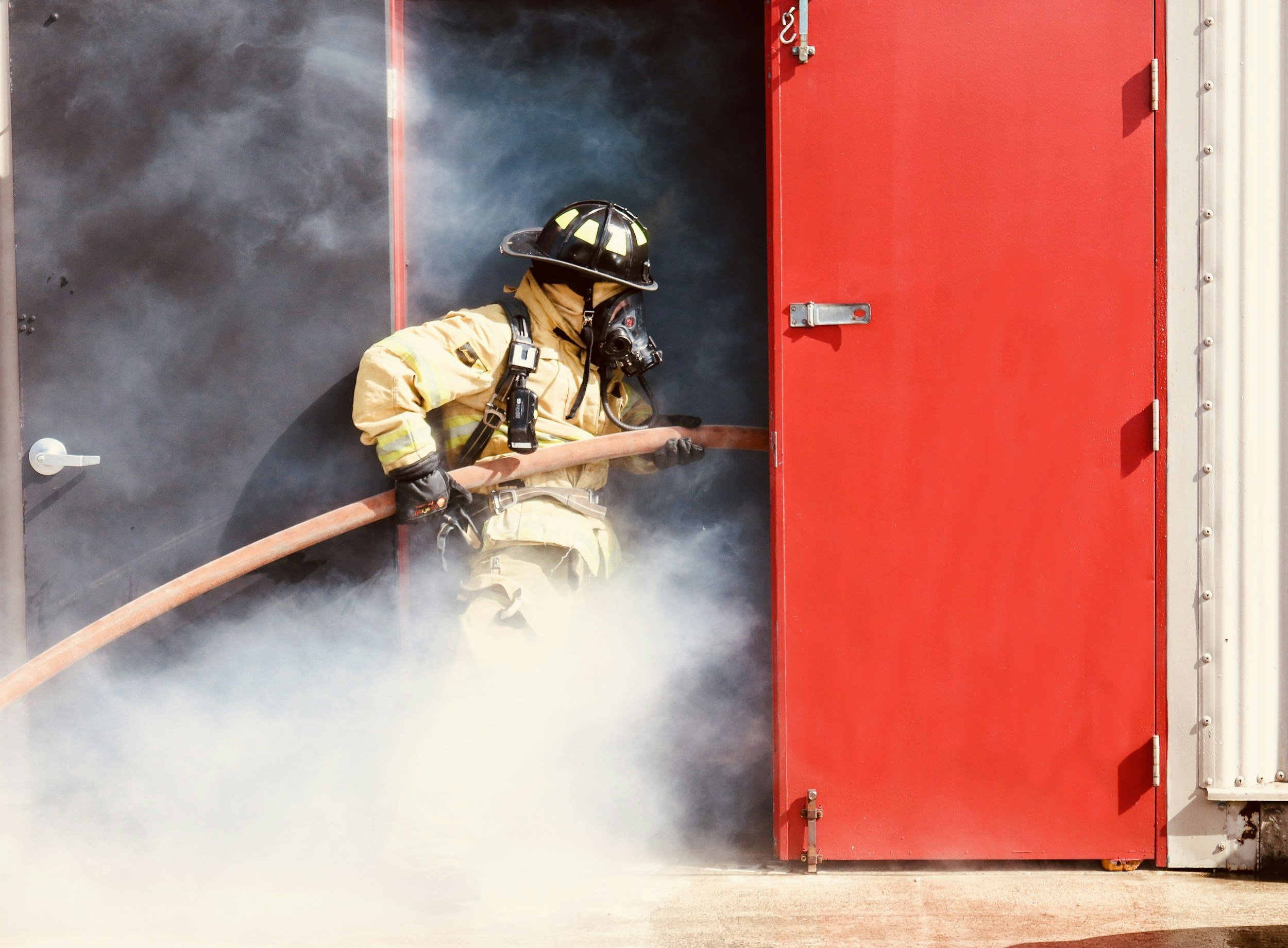
You know the shift never really ends.
You clock out. You drive home. You sit at the dinner table and people are talking, but part of you is still back on that call. The one from last Tuesday. Or the one from three years ago that you've never told anyone about. Or the one from September 11th, or the week after, when you were pulling out bodies instead of people.
You don't complain. That's not what you do. You signed up for this. You knew what the job was. And your guys are dealing with the same thing, so who are you to say anything?
I get it. And I want to talk to you straight, because I think you deserve that more than you deserve another pamphlet about calling a hotline.
What the Numbers Actually Say
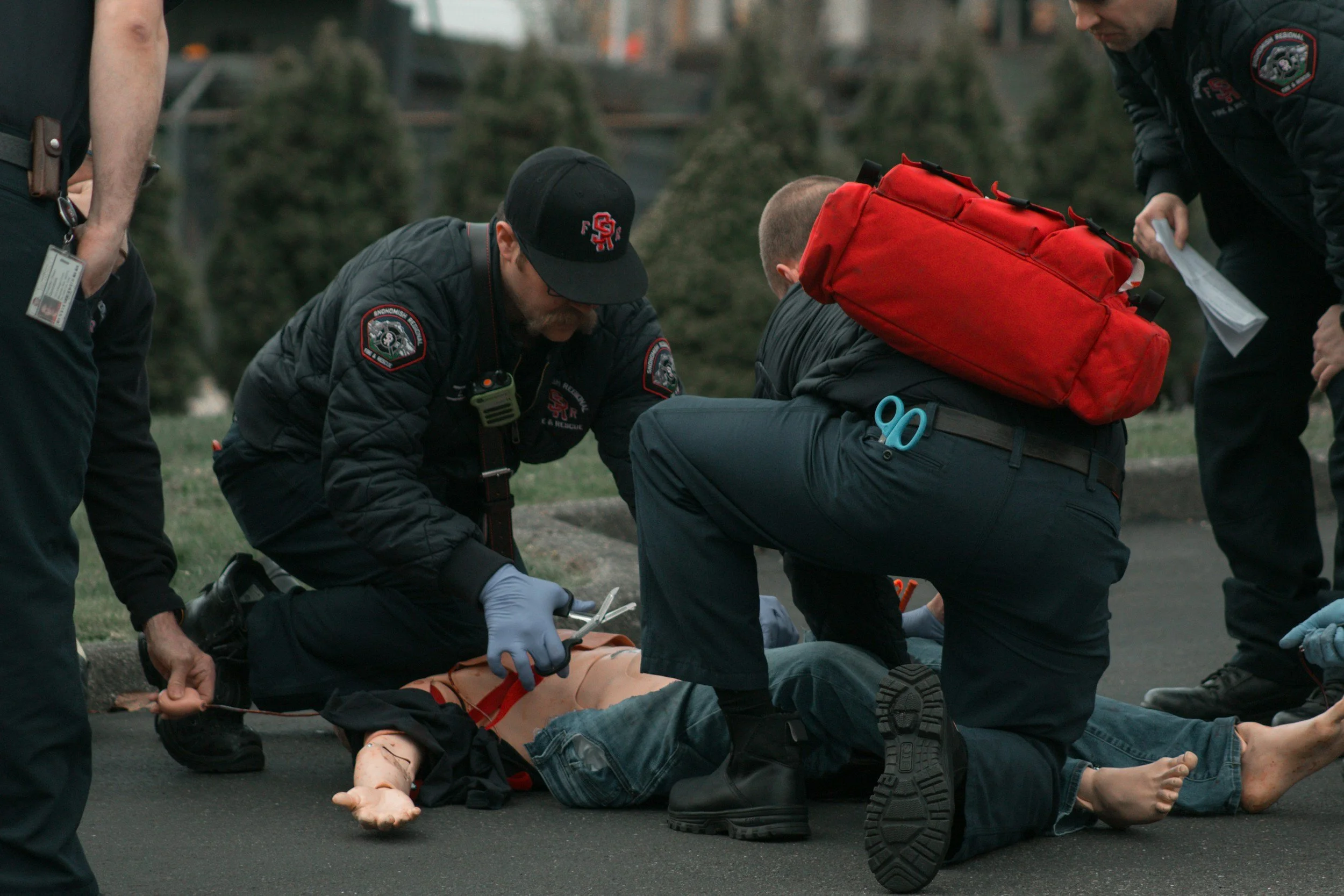
Let me give you some facts first, because I think facts are more useful than feelings when you're trying to understand something. Firefighters are more likely to die by suicide than in the line of duty. Not slightly more likely. Three times more likely. According to federal data, there were 127 firefighter and EMT suicides reported in a single year. The number of firefighters who died in the line of duty that same year was under 50. Approximately 20 to 30 percent of firefighters and paramedics will meet the criteria for PTSD at some point in their career, compared to 6.8 percent of the general public. A survey of EMTs and paramedics found that 37 percent had contemplated suicide and 6.6 percent had attempted it. These are not weak people. These are the strongest, most capable people most of us have ever met. Which tells you something important: strength has nothing to do with it. This is not a character problem. This is what happens to a human nervous system when it absorbs years of trauma without a real way to process it.
Why the Usual Options Haven't Cut It
You've probably tried something. Maybe the department's Employee Assistance Program (EAP). Maybe a therapist who had no idea what it's like to run into a burning building or work a pediatric code. Maybe you self-medicated for a while, because that worked until it didn't.
Here's what I notice with a lot of first responders: the standard mental health toolkit was not built for you. Talk therapy asks you to revisit and narrate your trauma over and over. For some people that works. For a lot of people who've spent years in high-stimulus, high-threat environments, sitting in a quiet office and talking about feelings isn't just uncomfortable. It can actually reinforce the hypervigilance rather than address it.
Your nervous system has been trained to scan for danger. It got very good at that job. The problem is it doesn't know how to turn off.
What the research is increasingly showing is that certain compounds, used carefully and intentionally, can actually interrupt that pattern at the neurological level. Not by numbing you out. By helping your brain access parts of itself that have been locked up since the last time something really bad happened.

What the Research Is Showing
Let me be clear upfront: I'm not here to sell you on anything. I'm here to give you accurate information that most people in your world aren't getting, and to let you make up your own mind.
MDMA-Assisted Therapy and PTSD
The most advanced research right now is on MDMA-assisted therapy for PTSD. A Phase 3 randomized clinical trial published in Nature Medicine found that after two sessions of MDMA-assisted therapy, 71 percent of participants no longer met the diagnostic criteria for PTSD. 71 percent. For context, traditional therapy gets those numbers nowhere close.
The trial included veterans, first responders, and survivors of sexual assault. These weren't people with mild anxiety. These were people with severe, treatment-resistant PTSD.
MDMA doesn't erase what happened. What it appears to do, neurologically, is reduce the threat response enough that you can actually look at a traumatic memory without your system going into full fight-or-flight. The memory stops being a live wire and becomes something you can actually hold and process. Many participants described it as being able to think about the worst moments of their lives without the physical terror that usually accompanies those thoughts.
Psilocybin and Trauma
Psilocybin research for PTSD is earlier stage but moving fast. Arizona recently approved a first-of-its-kind clinical trial specifically designed for first responders and military veterans with PTSD, involving firefighters, police officers, and veterans.
What psilocybin seems to do is quiet the Default Mode Network, the part of your brain that loops, ruminates, and keeps replaying the same material. For people stuck in a trauma loop, that quieting can create a window of genuine psychological flexibility. Things that felt immovable can shift. Perspectives that felt impossible to access become available.
A 2021 study published in Neuron found that psilocybin caused a significant increase in synaptic connections in the brain, connections that had been degraded by stress and trauma, and that those connections persisted for over a month after a single dose.
This is not magic. This is your brain being given the conditions it needs to repair itself.

Your Actual Legal Options Right Now
I know the first thing a lot of you are thinking. What about my job? What about my clearance? What if someone finds out?
These are fair questions and I'm going to answer them directly. But first let me lay out what you can actually do legally.
Ketamine Therapy (Fully Legal, Available Now in NYC)
Ketamine is FDA-approved and there are established clinics throughout the New York metro area. This is not a grey area. It is a legitimate medical treatment, covered by some insurance plans, that has shown significant and rapid reduction in PTSD symptom severity in studies conducted at institutions like Mt. Sinai and Yale.
For a lot of first responders, ketamine therapy is the right entry point. It's legal, it's discreet, it's accessible, and it works. The treatment involves IV infusions or nasal spray (Spravato, the FDA-approved form) in a clinical setting. Most courses involve six sessions over two to three weeks.
If you've been curious about this space but didn't know where to start, this is where I'd tell most people to start.
Clinical Trials
If you want access to cutting-edge research and you meet the criteria, participating in a clinical trial gives you access to treatments like MDMA-assisted therapy under proper medical supervision, often at no cost.
The VA's National Center for PTSD maintains a current overview of psychedelic-assisted therapy research. ClinicalTrials.gov lists active psilocybin PTSD studies enrolling participants right now. These are legitimate research programs with full medical oversight, privacy protections, and no risk to your employment.
The Grey Zone: Where Things Get More Complicated
I want to be honest with you here, because I said I would be.
In New York City, enforcement around psilocybin has been deprioritized. The city has moved away from arresting people for personal possession. That is not the same as it being legal. Psilocybin remains a Schedule I substance federally, and possession is still technically a crime under state law, even if NYPD has been directed to make it a low enforcement priority.
What I hear from people is questions about growing their own mushrooms for personal use. I'm going to tell you what the landscape actually looks like. Mushroom spores are legal to purchase in most states because they do not contain psilocybin. The act of cultivating them into mature mushrooms does produce a controlled substance, which puts you in grey legal territory. In NYC, given the deprioritized enforcement posture, personal cultivation for personal use carries significantly lower legal risk than it did several years ago, but I can't tell you it's risk-free, because it isn't.
What I can tell you is that a lot of people in this city are navigating that grey area thoughtfully and doing it in a way that's largely private and personal. If that's something you're considering, the most important thing is doing it with intention, support, and a clear understanding of what you're getting into. Which is where integration coaching comes in.

Make it stand out
What About Your Job
This is the real question for most of you, so let me address it directly.
First: any work you do with a private therapist, a ketamine clinic, or an integration coach is protected health information. It is covered by HIPAA. Your department does not have access to your private medical records unless you choose to share them or you are involved in a mandatory fitness-for-duty evaluation.
Second: most departments do not routinely test for psilocybin. Standard drug panels don't screen for it. Ketamine therapy, if done through a legitimate clinic, is a legal medical treatment and would be treated as such.
Third: there is a difference between seeking help and needing to report that you sought help. Those are not the same thing.
I know the culture. I know what it means in some houses to be the guy who needed help. I also know that culture is changing, slowly and unevenly, but changing. And I know that the guys who wait until it becomes a crisis have far fewer options than the guys who address it while they still have choices.
You're not broken. You're carrying something heavy and you've been carrying it alone. That's not weakness. That's just physics. At some point, everything gets put down.

What Integration Coaching Actually Is
Let me clear something up. Psychedelic integration coaching is not therapy and it's not a medical treatment. It's a structured support practice that helps people prepare for, and make sense of, experiences with psychedelic compounds.
What that looks like in practice: we talk before, so you go in with intention and context. We talk after, so what came up doesn't just float away or knock you sideways. We look at what emerged and we build a framework for actually living it, not just having it.
For first responders especially, I find that the integration work is often where the real shift happens. The experience opens a door. Integration is how you walk through it and don't end up more confused than when you started.
If you're working with ketamine legally, we can build an integration practice around that. If you're exploring other options, I'm here to help you do that thoughtfully and safely.
This is not about pushing you toward anything. It's about making sure that if you take a step, you don't take it alone.

You Don't Have to Decide Anything Today
The point of this article is not to convince you of something. It's to put accurate information in front of you that most people in your world aren't getting, so that when you're ready, if you're ready, you know what's out there.
You've spent your career running toward things everyone else runs from. You know how to assess a situation, figure out what's real, and make a call.
I'm just giving you the briefing.
If you have questions or you want to talk through any of this, reach out. No pressure, no pitch. Just a real conversation.
That's what Brooklyn Balance is here for.
Josh Jupiter is a psychedelic integration coach and founder of Brooklyn Balance, a wellness practice in Brooklyn, New York. This article is for educational and informational purposes only and does not constitute medical or legal advice. For guidance on any of the therapeutic options discussed, please consult a qualified healthcare provider. For information on clinical trials, visit ClinicalTrials.gov.
Ready to go deeper? Reach out to Josh to learn about one-on-one integration coaching, group programs, and upcoming workshops at Brooklyn Balance.