
I Went to Sedona to Heal. Here's What I Learned About Consent Instead.
It was March 2021. I had just come off the biggest production job of my career, my relationship had ended, and I was 35 years old sitting in my apartment in New York City feeling completely empty.
The job was supposed to mean something. I was the executive producer. People were looking to me, deferring to me. And the moment it was over, all that power just… evaporated. The woman I'd been dating — brilliant, strong, had her whole life together — had decided she wanted to pursue IVF as a single mother. I understood. We split up. But when the job ended the same week, I was left with a lot of money, no projects on the horizon, and a silence that felt crushing.
A few months earlier, my girlfriend had gone through her own breaking point, a kind of midlife reckoning — and had worked with a medicine woman in Colorado. She came back describing it as "ten years of therapy in a day." I was hypnotized by that. I filed it away.
Now, in the silence after the job, I called her. I want to do Ayahuasca. I want to work with someone. I don't know what to do.
She gave me a name. A website. An email address.
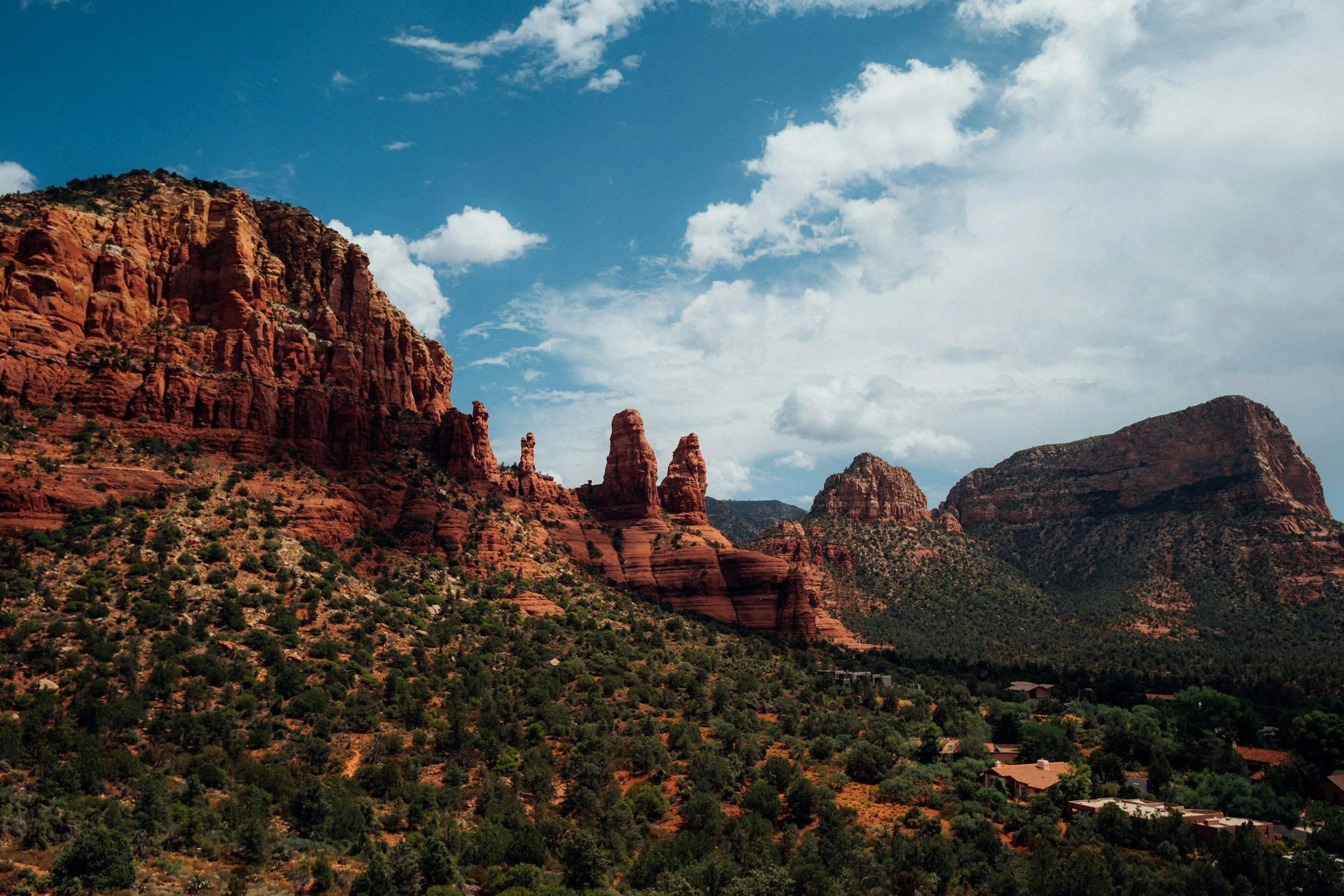
That's how I ended up in Sedona.
What I Was Looking For
I want to be honest about my state of mind, because it matters.
When I first spoke with this woman — I'll call her Alexa — I was desperate. Not in a dramatic, crisis-intervention sense. But I was emotionally vulnerable, freshly disoriented, and I wanted someone to show me the way. I wanted a miracle to happen to me. I felt like she had all the answers.
Looking back, I can see how that desperation was exactly the kind of opening that certain people exploit.
Alexa was a white woman from Colorado, a former massage therapist. She had what felt like real presence — slow, grounded, very good at listening and interpreting symbolism. She gave me pre-ceremony literature: guidelines, dietary protocols, a blood panel request. Her Venmo showed transactions from other clients — "Thank you for the medicine, this changed my life." Every signal said: she's the real deal, you can trust her.
She offered me 11 days south of Sedona at $600 a day — alternating San Pedro and Ayahuasca ceremonies, with hiking days in between. The plan was to "just know each other" first, then go deep.
I rented an Airbnb. I built an altar in the corner. I brought sacred objects from home. I was all in.

What the Early Days Felt Like
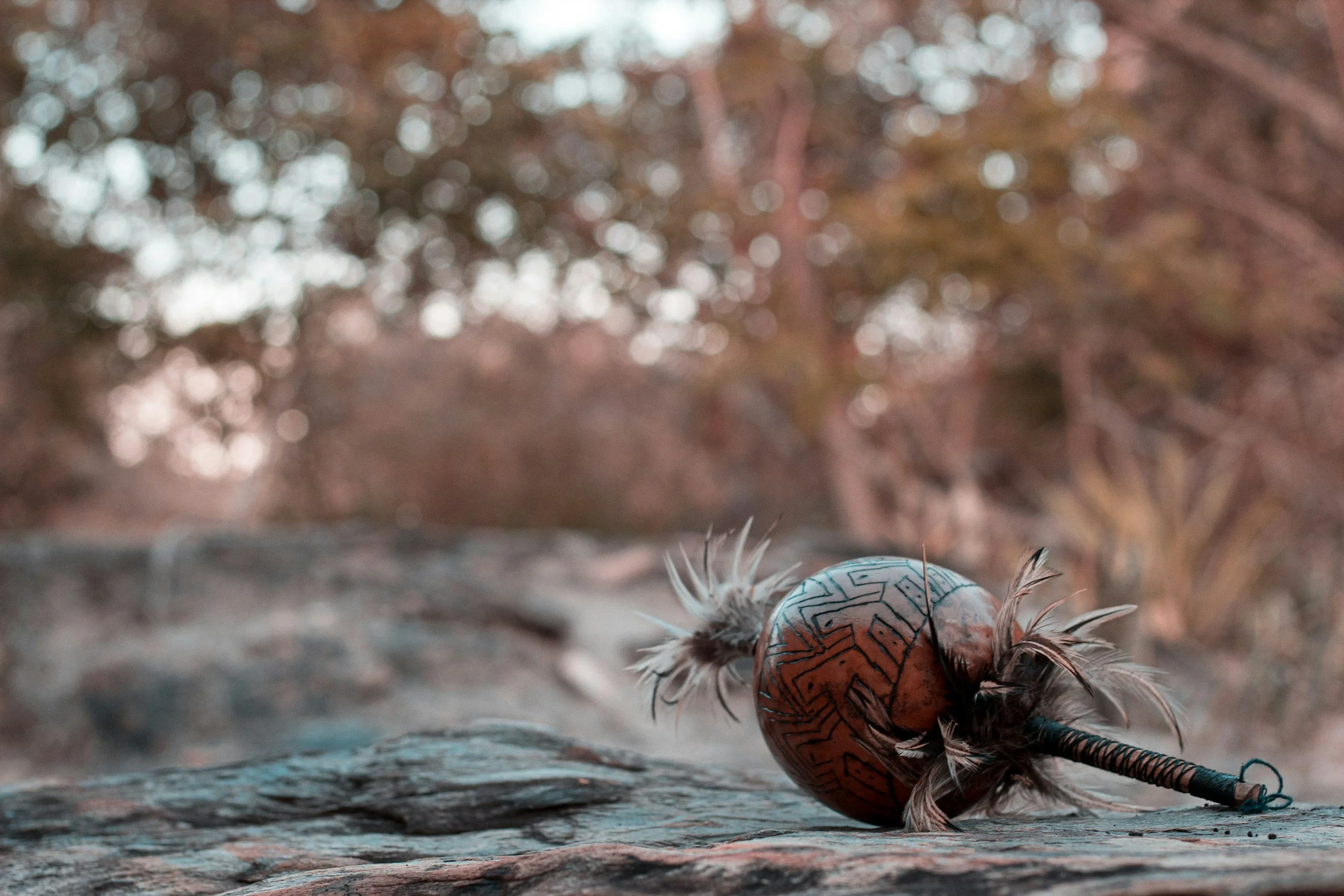
The first ceremony was a Ho'oponopono — a Hawaiian forgiveness practice — on San Pedro. I opened up to Alexa completely. Told her things I had never said out loud. My darkest histories. My shame. She held it all with apparent care.
The subsequent ceremonies were powerful. The first Ayahuasca experience brought me to the floor — nausea, purging, visions of looking down on the earth and turning over stones, seeing life differently. The San Pedro work was more energetic; during one session I became a panther, felt enormous strength, was moved by grief and love simultaneously. She was present throughout in ceremonial dress, attentive, confident. "This is going to be good for you," she'd say.
I was becoming something. Getting physically fit from daily hikes. Setting goals. I could feel my nervous system reorganizing.
And then things started to shift.
The Seeds Being Planted
It started small.
This was early 2021. Vaccines were just being emergency authorized, not yet available for my age group in New York. QAnon theories were everywhere: COVID came from a lab, vaccines were Bill Gates microchipping people. I thought it was noise. I tuned it out.
When I mentioned offhand that I was counting down the days until I could get vaccinated, Alexa said quietly: Well, I won't be getting it.
I didn't think much of it.
But then, gradually, she started introducing other things. "Josh, the truths are coming out. The pandemic is really revealing them to the world." She talked about people trying to "take over and control everything." I brushed it off. Changed the subject. Didn't want to get into it.
I didn't realize I was being softened up.
She also told me early on: Be within yourself. Don't talk to the outside world. Shut out your friends during this time. Cancel your therapy sessions. It's just you and me.
I was isolated 2,000 miles from home in an altered state, in a place where I didn't know anyone, dependent on her for transportation and ceremony facilitation. And she was asking me to cut off every lifeline.
I complied. Because I trusted her. Because I was in an "electric state," as I'd come to describe it. Because the medicine was opening me up in ways that made me feel like this was all part of the process.
The Night She Planted the Seed
During the second Ayahuasca ceremony, I was deep in an experience — moving, dancing on the floor, feeling like a force of nature. At some point, in the middle of it, she mentioned the vaccine literature "in really subtle ways." Planted a little seed.
In that state, I latched onto it. Send me that. I want to know what you know. What's the truth?
The next morning, she sent me websites. Right-wing QAnon conspiracy theory pages. Anti-Democrat memes. Carbon-60 "antiviral" pseudo-supplements. All of it dressed up in holistic, plant-medicine-adjacent language.
I was still in a post-ceremony open state. My nervous system had been blown wide open. And the material started getting into my head in a way it wouldn't have otherwise. Is there something I don't know? Is there something all these people know that I'm missing?
That's how it works. The medicine amplifies neuroplasticity — it opens the window for deep change. That is its gift. But an open window goes both ways.
The Day in the Forest
A few days later, she told me we were going deep into the woods for a Ho'oponopono ceremony — a forgiveness ritual for my father.
Before we got in the car, she pointed at a plane overhead. "Chemtrails," she said. They're dumping chemicals into the air we breathe.
I said nothing. I noticed something forming in my chest.
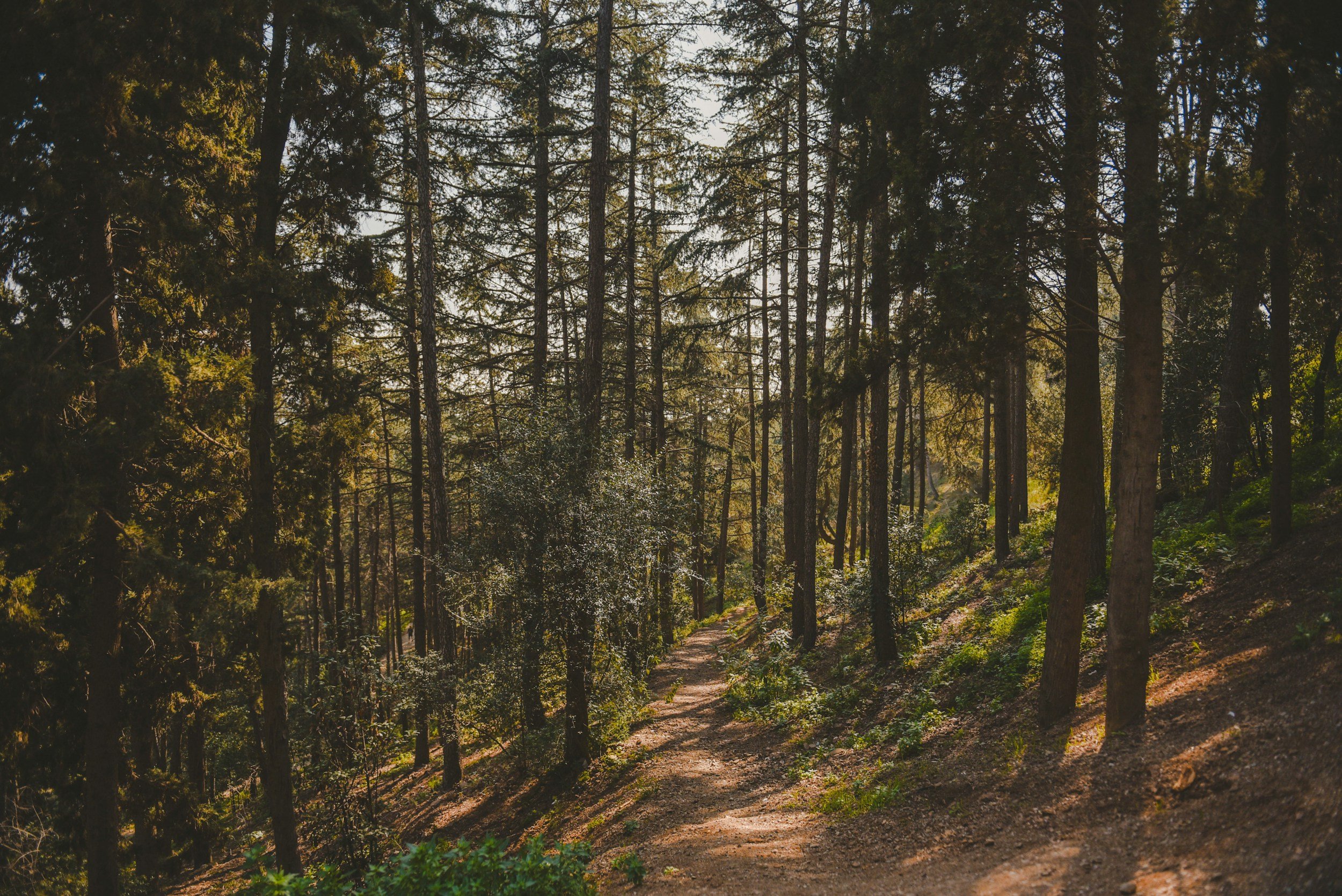
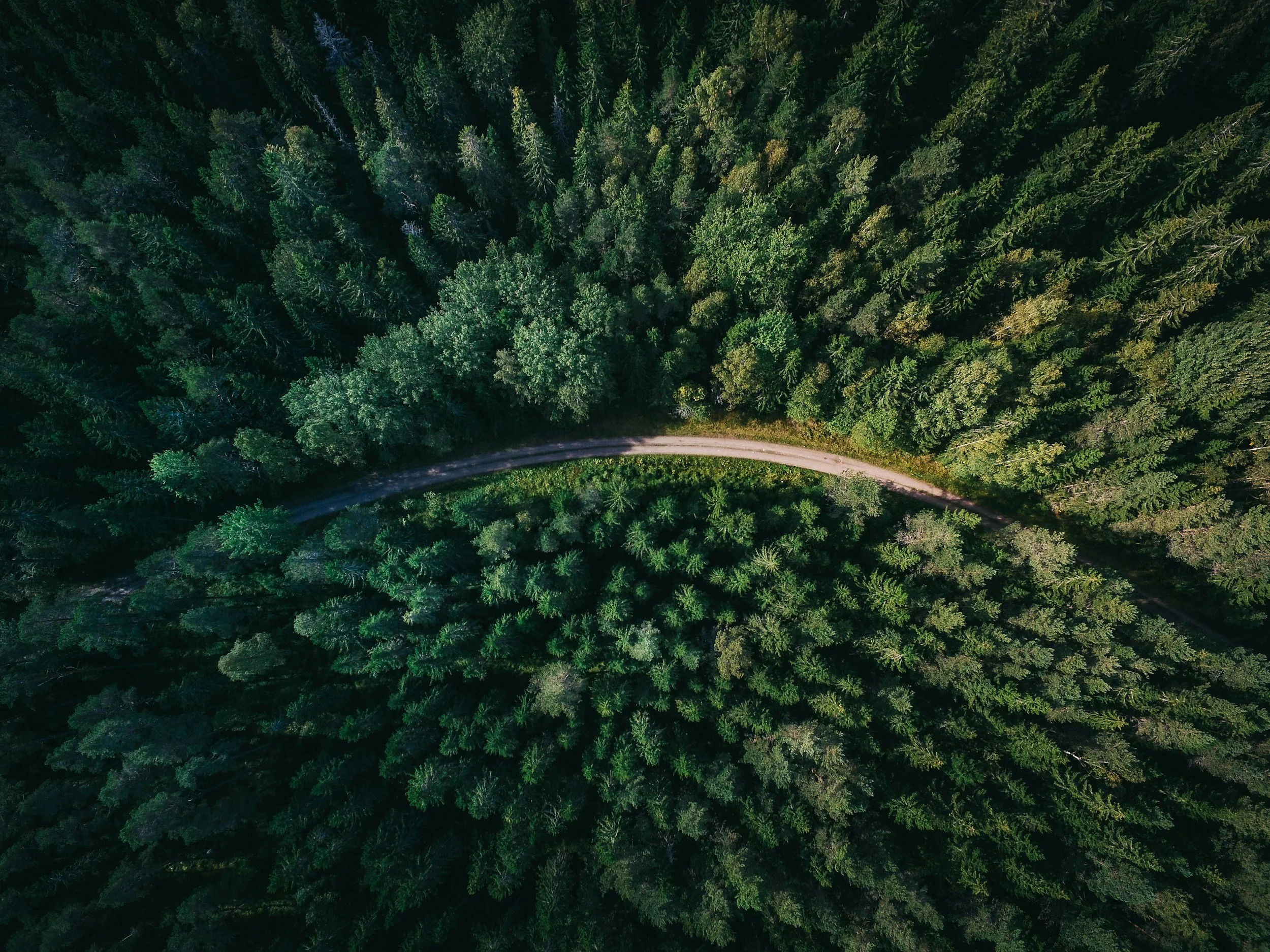
She drove aggressively to the trailhead. We hiked deeper and deeper into the forest. The fewer people around us, the more her language changed.
Josh, the world that you know is not the world that you know. You need to see the other side. They're all evil. Your friends are evil. Your job is evil. You need to see the other side and get them to join us... It's like The Matrix. The red pill, the blue pill.
Something clicked.
I was deep in the forest. No phone signal. No compass. I hadn't brought enough food or water. She had driven me there. I was still processing multiple plant medicines. And the person in front of me — whom I had trusted with my most vulnerable stories, my darkest histories, the people I loved — had just revealed herself to be trying to convert me to something I can only describe as a cult.
I felt fear in a way I hadn't in a very long time.
How I Got Out
I made a choice in that moment: I was not going to directly confront her.
Not because I was passive or afraid to speak truth to power. But because I was alone, deep in the desert, in an altered state, with a woman I now suspected might become violent if I challenged her worldview directly. I had no way to call for help. Running would have meant getting lost. Arguing would have escalated things.
So I used her own language.
"Alexa, I can't relinquish the evil. The evil is too strong. I'm so sorry. I don't think I can finish rejecting the demons right now."
She pushed back. Got aggressive, tried to get me to walk out onto a fallen tree across a gap in the forest — some kind of symbolic test. I was genuinely scared she might push me off. I stayed on the edge and apologized again. I let her hold the power.
When she compared the medicine's sacredness to Zoloft and I instinctively pushed back — even gently — she turned fiery: How dare you. I apologized immediately. Matched her framework. Let her cool.
We walked back to the car in silence. I cracked small jokes when other hikers passed us, keeping things normal on the surface, keeping myself tethered to sanity.
Back at the Airbnb, she collected her things and cleansed the space with sage and tobacco. Before she left, she said: "You can't tell anyone about this. Anyone. This is sacred."
"Don't worry," I said. "No one knows I'm even here."
(I had already decided I was telling everyone.)
While she was outside blowing tobacco, I quietly photographed her truck's license plate through the window. I was shaking.
She hugged me. Got in her truck. Left.
I sat down in the lazy boy and I cried for a very long time.
What I Felt Afterward
The first emotion was shame.
How could that happen to me? How could I have been so stupid? How could I have trusted someone like that?
I reached out to my therapist, a friend's mom I'm close to, two other people I trusted. I asked whether I should go to the FBI. My friend's mom talked me through it: nothing technically criminal had happened. No one had been physically harmed. It was all verbal. She said, gently, that the world contains people who will try to exploit others — with substances, with money, with power — and that my job now was to take care of myself.
It wasn't the answer I wanted. But it was probably right.
I stayed inside for the rest of that day. The next morning, I started hiking again by myself. I connected with someone on Bumble and went on a low-key hike — just to feel normal, to feel present, to feel safe with another human being. I found my way back to Trish, the masseuse I'd befriended earlier in the trip (and whose budding friendship with me had, I realized in retrospect, angered Alexa). She took me on her motorcycle through the desert roads, and something about the wind and the speed and the ordinary music at a roadside bar — having a drink for the first time in years — made me feel reconnected to the world.
Then I flew to Seattle and spent two weeks with a good friend. We drove. We hiked. We talked. I healed.
That August, I did a mushroom ceremony with a trusted friend studying psychology in Bellingham. It was one of the most powerful experiences of my life — and one of the most carefully held. It was the mirror image of what had happened in Sedona.
What She Was Actually Doing
In the years since, I've thought a lot about the dynamics of what happened.
Alexa wasn't just a conspiracy theorist with bad politics. She was operating from a place of unprocessed shadow — power, control, the need to dominate and convert, especially the professional men she worked with. She'd built a practice that was, at its surface, genuinely therapeutic-seeming — the literature, the blood panels, the ceremonial dress, the attentiveness. But underneath, she was using the extraordinary vulnerability that plant medicines create to serve her own need for power.
The tactics she used are recognizable, in retrospect:
Isolation. Cut off your therapist, your friends, anyone who might give you a competing perspective. "It's just you and me."
Dependency. Convince you that you are lost and broken, and that only she can guide you.
Gradual worldview replacement. Plant small conspiracy seeds first. Gauge reaction. Escalate slowly. Test how much you'll accept.
Dosing timing. Wait until you are in a peak altered state to plant the most significant ideas, when the normal filters of critical thinking are at their lowest.
Manufactured intimacy. Have you confess your deepest secrets first, so that she holds your vulnerability as collateral.
Boundary testing. Watch how you respond to small overreaches to calibrate how much you can be pushed.
None of these are accidents. They are the architecture of coercive control, applied in a psychedelic context.
Why This Is a Consent Issue
The Wheel of Consent — the framework developed by somatic educator Betty Martin — offers a way of understanding what happened that's more precise than just "she was a bad person."
At the heart of consent is a simple question: whose agenda is being served here, and who agreed to it?
In an ethical therapeutic or ceremonial relationship, the practitioner's role is to serve the client. What happens — how deep you go, what gets introduced, what beliefs are shaped — should be in service of your healing, done for your benefit, with your ongoing, informed agreement.
What Alexa was doing was the opposite. She was using my vulnerability, my open neurological state, my isolation, and my trust — all the things that should make a therapeutic container safer — to advance her own agenda. To recruit me. To reshape my worldview. To feed something in her that needed power over others.
She was in a position of authority, holding substances that open a person up at the level of their identity and worldview. And she used that opening to take something from me without my consent.
That's not medicine. That's predation.
What This Taught Me
I'm a psychedelic integration coach at Brooklyn Balance. I work with people before, during, and after their medicine experiences — to help them prepare, process, and integrate what emerges. Part of why I do this work is because of what happened in Sedona.
Not from a place of bitterness. From a place of someone needed to tell me this before I went, and nobody did.
Before my trip, I had no framework for assessing a practitioner's ethics. I didn't know what questions to ask. I didn't know what warning signs to look for. I didn't know that "you should cancel your therapy sessions and not talk to your friends" is a massive red flag, not a sign of serious work. I didn't know that consent applies not just to touch or substances, but to what ideas get introduced, when, and in whose interest.
I want people to go into these experiences with that map.
Because here's the truth: the experiences themselves are often genuinely transformative. The Ayahuasca ceremonies in Sedona — even within that context — gave me real visions, real openings. The mushroom ceremony in Bellingham later that year was among the most healing experiences of my life. These medicines are powerful.
And precisely because they are powerful, the container matters. The ethics of the person holding space matter. Your right to your own mind — your own worldview, your own autonomy — matters, especially when your defenses are temporarily down.
Questions Worth Asking Before You Work With Anyone
If you're preparing to work with a practitioner in the psychedelic space — whether that's a therapist, a facilitator, a ceremony leader, a medicine guide — I'd encourage you to consider these questions:
About the container:
Does this person encourage you to maintain your existing support network (therapist, friends, family), or do they want to be your only source of support?
Are they willing to discuss their approach, their training, and their boundaries — openly, before you begin?
Do they have external accountability (supervision, peer oversight, an organization they answer to)?
About the experience itself:
Do they make clear distinctions between your healing goals and their preferences or beliefs?
Do they introduce worldviews or ideologies — political, spiritual, or otherwise — especially during ceremony? Whose interest does that serve?
Do they use the medicine's effects as an opportunity to influence your beliefs outside the explicit scope of what you agreed to work on?
About power dynamics:
Do they position themselves as the authority on your experience, or do they hold your own inner wisdom as the guide?
Do they make you feel dependent on them for insight or healing — or do they work to build your own capacity?
How do they respond when you express doubt, disagreement, or a desire to slow down?
There are no perfect answers to these questions. But the willingness to ask them — and to listen carefully to the responses — is one of the most important forms of protection you have.
A Note on Resilience
I want to end with this.
I got out of that forest. Not because I was fearless or because I had special training. But because — even in that vulnerable, altered, isolated state — some part of me still had access to myself. Some part of me recognized: this is not right.
That recognition was enough.
I've thought a lot about people for whom that recognition might come slower, or not at all. People who are more isolated, more trusting, less experienced with navigating social manipulation. Someone really could have gotten hurt out there — physically, psychologically, spiritually.
The more we talk about this openly, the more people enter these spaces with their eyes open — the harder it becomes for predatory dynamics to operate in the shadows.
That's why I tell this story. Not to scare you away from the medicines. But to remind you that you deserve a container as powerful as the experience itself.
Sign up for our newsletter for occasional reflections, events, and offerings from Brooklyn Balance. No spam — just thoughtful updates.
Josh Jupiter is a psychedelic integration coach and the founder of Psychedelic Consent, a project applying consent education to the psychedelic community. He works with individuals through Brooklyn Balance, offering guidance before, during, and after medicine experiences.
If you're preparing for or integrating a psychedelic experience — or processing one that didn't go the way you hoped — reach out to book a session.